
© 2009-2026 American Psychoanalytic Association | 122 East 42nd Street, Suite 2310, New York, NY 10168 | Phone: (212) 752-0450 | [email protected]
Plenaries
This year we are pleased to offer two plenaries at the National Meeting. We will kick off the Meeting week with Nancy McWilliams on Tuesday and we’ll end the week with Dionne Powell on Friday.
Nancy McWilliams, Ph.D.
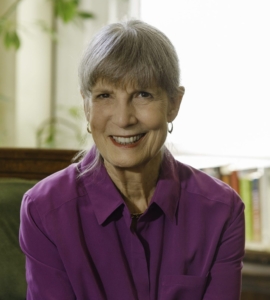
Nancy McWilliams is Visiting Professor Emerita at Rutgers University’s Graduate School of Applied & Professional Psychology and practices in Lambertville, New Jersey. She is author of Psychoanalytic Diagnosis (1994, rev. ed. 2011), Psychoanalytic Case Formulation (1999), Psychoanalytic Psychotherapy (2004) and Psychoanalytic Supervision (2021) and is associate editor of all editions of the Psychodynamic Diagnostic Manual (2006, 2017, 2025). A former president of Division 39 (Psychoanalysis) of the American Psychological Association, she has been featured in three APA videos of master clinicians. She is on the Board of Trustees of the Austen Riggs Center in Stockbridge, MA. Her books are available in over 20 languages, and she has taught in person or remotely in more than 50 countries.
Tuesday, February 2, 2027
9:00 a.m.
Saving Psychoanalysis
Psychoanalysis and psychoanalytic therapies are facing devaluation from corporate interests, from mistaken assumptions that there is no evidence supporting psychoanalytic treatments, from the characterization of Sigmund Freud as a cocaine-addled misogynist, and from political and generational stresses within psychoanalytic organizations. As analytic supervisors age out of medical schools and graduate programs, students are losing access to psychoanalytic ways to think about patients. Yet there is a growing interest in psychoanalysis among clinicians trained in other perspectives and among scholars of sociocultural privilege, power, and trauma – areas that neither biological psychiatry nor cognitive psychology illuminate adequately. Dr. McWilliams will focus on factors that have undermined the standing of psychoanalysis and will suggest ways to preserve and expand psychoanalytic thought and practice in the contemporary environment.
Dionne R. Powell, M.D.
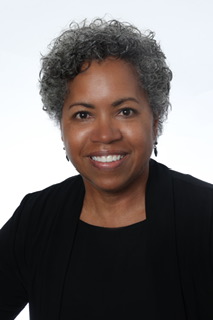
Dr. Dionne Powell is a Training and Supervising Psychoanalyst at the Psychoanalytic Association of New York, and at Columbia University Center for Psychoanalytic Training and Research.
Dr. Powell was Co-Chair of the Holmes Commission on Racial Equity in American Psychoanalysis; is Vice-President of the American Association for Psychoanalytic Education; sits on the International Psychoanalytic Association Board as North American Representative.
Contributions include: Becoming Raced: Psychic Consequences of Transgenerational Racial Trauma. International Journal of Psychoanalysis, 2025. IJP Journal Club: Race, African Americans, and Psychoanalysis: Collective Silence in the Therapeutic Situation. September 26, 2025, YouTube. In Pursuit of Racial Equality in American Psychoanalysis: Findings and Recommendations from the Holmes Commission. Holmes, et. al. JAPA, 2024. Upcoming discussant with artist Stan Douglas: IPA Congress Vancouver 2027.
Friday, February 5, 2027
4:30 p.m.
Ghosts in the Institutions: Psychoanalytic Education In a Raced World
A critical gap exists in psychoanalytic education regarding how systemic racism, institutional structures, and unconscious resistances impede the field’s transmission and evolution. Educators often conflate diverse training standards with a deflation of clinical rigor, reinforcing exclusionary practices illuminated by the Holmes Commission. Furthermore, a lack of non-hierarchical, culturally humble approaches leaves training systems ill-equipped to integrate the diversities of current psychoanalytic/psychotherapy candidates/trainees with the modernity of AI and virtual treatments. Of particular educational and clinical interest is to return to the origin story of psychoanalysis, founded in the biopsychosocial model, as a discursive enterprise that disrupts the frame by confronting internal resistances to exploring our raced selves, securing an immersive, rigorous, and sustainable structure for the future of psychoanalytic education, analytic identity and the profession.
After attending this session, learners will be able to: 1) Analyze how internal resistance to including the “raced other” stems from childhood-transmitted, devalued self-projections that are sustained by familial and institutional ties rather than the externalized other; 2) Integrate the biopsychosocial model and the Holmes Commission recommendations into a comprehensive re-imagining of immersive, psychoanalytic/psychotherapy training/education and transmission.