
Psychodynamic Techniques: Working with Emotion in the Therapeutic Relationship
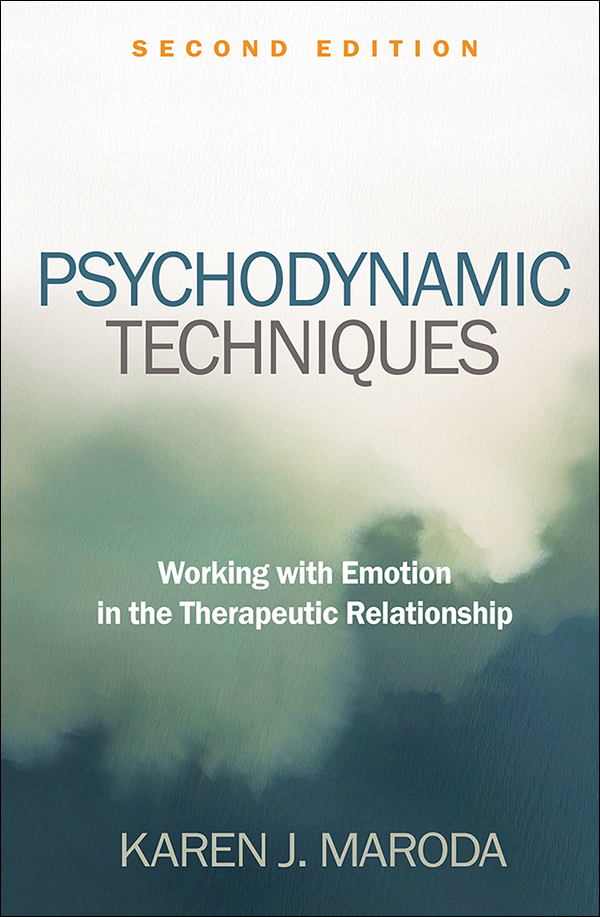
By Karen J. Maroda
Acclaimed for its practical guidance and candid, personal style, this instructive book is now in a revised and updated second edition.
Karen J. Maroda explores the vital role of emotion processing in the therapeutic relationship and presents ways that therapists can work with emotions—both their own and the client’s—to make treatment more effective. The book discusses how to become more attuned to one’s own experience of a client, use direct feedback and self-disclosure constructively, and manage intense feelings and conflict in the relationship. Specific techniques are illustrated with vivid case material, including examples of both successful and unsuccessful interventions.
New to This Edition:
- Chapter on transference and extratransference.
- Chapter on the ethics of self-disclosure.
- Significantly revised chapter on regression.
- Updated throughout with over 15 years of developments in theory and research.
Available wherever you buy books or purchase directly from Guilford Press.
Praise for Psychodynamic Techniques
“Maroda stands out among contemporary psychodynamic writers for her clarity, directness, and capacity to extract practical guidelines from the critical emotional connection between patient and therapist. Rather than generalizing about rules of treatment, she draws on research, theory, and her own successes and failures in different affective contexts to provide principles of intervention. I recommend the revised second edition of this classic work to anyone wanting to see how a master clinician translates empirical findings, clinical experience, and the individuality of both client and clinician into effective psychotherapy.”–Nancy McWilliams, PhD, ABPP, Visiting Professor Emerita, Graduate School of Applied and Professional Psychology, Rutgers, The State University of New Jersey
“Trainees, regardless of their theoretical commitments, will appreciate Maroda’s practical, plain-speaking approach to common clinical challenges, along with her generous illustrations of clinical work drawn from her own practice. The chapter on ‘Overcoming Our Fear of Anger and Conflict’ is pure gold.”–Jonathan Shedler, PhD, Department of Psychiatry and Behavioral Sciences, University of California San Francisco
“Maroda has an incredible gift for bringing the inner world of therapy to life, reminding us that at its core, this work is about human connection and emotional honesty. The second edition of this book feels like sitting with a wise and deeply compassionate mentor. What makes this foundational book so special is how effortlessly Maroda distills complex psychodynamic and relational theories into insights that feel real, usable, and alive within the classroom and in the therapy room. Reading Maroda’s work always leaves myself and my students deeply moved and energized, and reminds me why I love being both a professor and a clinician. She bridges the gap between theory and lived experience with such grace and humanity. Her work doesn’t just teach, it transforms.”–Roy Barsness, PhD, Seattle School of Theology and Psychology (Emeritus); Founder and Executive Director, Contemporary Psychodynamic Institute
“This book is grounded not in the abstract dictates of theory but in the blood, sweat, and tears of actual sessions. It is filled with clinical wisdom and fresh thinking that can enrich and enlighten beginning therapists and more experienced clinicians as well. I am struck by Maroda’s openness, honesty, and emotional engagement, and by her demonstration of how attention to the person’s daily life experiences and place in the world complements–rather than restricts–deep understanding of affect and subjectivity. A genuinely valuable contribution.”–Paul L. Wachtel, PhD, Distinguished Professor, Doctoral Program in Clinical Psychology, City College of the City University of New York
“It is rare that an introductory text achieves the status of a classic in the field–one that most of us have read or taught, and which we immediately think to recommend when a new student asks for guidance. I have used this book for many years in teaching master’s- and doctoral-level trainees, and I am continually impressed by the relatable, jargon-free way in which Maroda brings learners into some of the most interesting and rewarding questions of contemporary psychodynamic practice.”–Gregory S. Rizzolo, PhD, Editor-in-Chief, Journal of the American Psychoanalytic Association