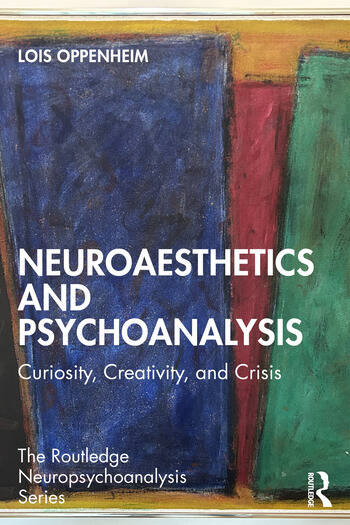
Neuroaesthetics and Psychoanalysis: Curiosity, Creativity, and Crisis
By Lois Oppenheim
This book looks at the fundamental question of why we take pleasure in art through a relatively new perspective of neuroaesthetics and explores the close links between cognitive and affective processes used in understanding art and science.
Drawing on the new and rapidly developing school of neuroaesthetics, the author explores the meaning of mind in the context of both creation and viewing. She considers the meaning of the affective experience of color and form, as well as the meaning of “modern” and its aftermath, all within the context of pleasure and its source. This book further enframes the pleasure of aesthetic experience in the embodiment of mind defined by the concept of drive. It is an exploration of how the mind becomes what it is, its comprehensive relation to the neuroperceptual, to feeling, to ambiguity and uncertainty that allows for an understanding of what would more tellingly be termed ‘neuropsychoaesthetics’.
With insights drawn from the latest neuroscientific findings and a deep understanding of both artistic and scientific thinking, this is key reading for psychoanalysts, psychotherapists and anyone wanting to understand the human mind better.
Available wherever you buy books or purchase directly from Routledge.
Praise for Neuroaesthetics and Psychoanalysis
‘Lois Oppenheim offers a brilliant consideration of what makes us human by investigating the question of why we value art. Her interdisciplinary approach through aesthetics, neuroscience, and psychoanalysis models the value of integrative thinking on an understanding of how we approach the crisis of not knowing what we need to know, the crisis of uncertainty. Her focus on the grounding of consciousness in feeling argues strongly against a reductive deterministic approach to human experience. Her presentation of the interrelation of curiosity, creativity, and crisis inspires hope for the future of humankind in the context of sociopolitical crisis.’
Harriet Wolfe, M.D., Past President, International Psychoanalytical Association
‘At last, a neuroscience of aesthetics based on a systematic exploration of the basic emotions.’
Oliver Turnbull, Prof of Neuropsychology, Bangor University Wales, UK
‘Deftly combining neuroscience, psychoanalysis and art, Lois Oppenheim opens up new ways of thinking about creativity. Challenging deterministic understandings of the aesthetically-engaged mind—whether in artists and writers or viewers and readers—she brings her immense erudition to bear on questions of what impels “the curiosity and creativity that characterize human experience.” Taking the mind to be an active agent, and imagination a human need, Oppenheim writes clearly, thoughtfully and with urgent concern about the crises jeopardizing the artistic freedoms she champions.’
Nancy Princenthal, author, Agnes Martin: Her Life and Art and Unspeakable Acts: Women, Art, and Sexual Violence in the 1970s.