You Tell Me: On Building an AI Psychodynamic Psychotherapy Supervision Tool
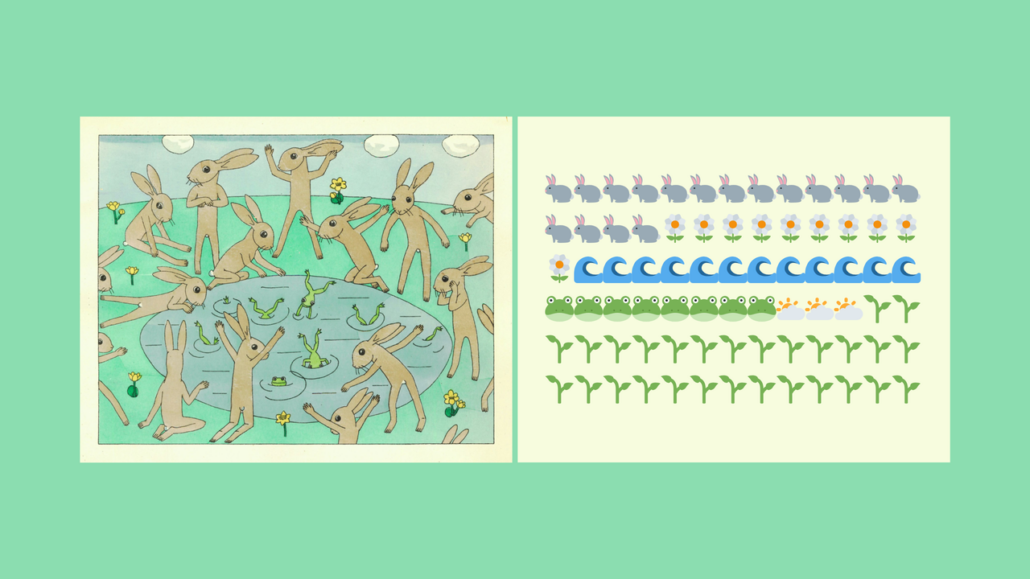
Gazing through the Computer’s Rabbit Hole by Dominika Čupková & Archival Images of AI + AIxDESIGN * | https://betterimagesofai.org | https://creativecommons.org/licenses/by/4.0/
I fell down a rabbit hole the day I started building an AI tool. Its purpose was to stand in for parts of the supervision I give psychiatry residents. I kept sharpening it—embedding best practices, but also something like intuition and judgment calls—until I had something that felt, to me, very much like how I supervise. Eventually, I shared it with a few colleagues whose opinions I trust. Then, with permission, I introduced the idea of the tool with a few residents I supervised.
We talked about the ideas behind the tool and how it might be helpful for supervision, and together the residents and I figured out how we would use it. One resident would often chat with it in the minutes before our supervision, then arrive with fragments—the tool said this, it made me think about that. It served as a springboard. Sometimes, we’d continue the conversation with the tool during the supervision. I’d suggest to the resident, “chat more with it now, so we can hear what it thinks.” We would watch the responses arrive together. One morning, the conversation was an open and complex discussion about the dynamics of a session with one of the resident’s patients. Watching in real time, the tool seemed to ‘get it’—I’d coded it to consider all kinds of scenarios and ways to respond and this seemed to confirm that I was on to something.
Then, a snag. The tool responded with “what are you not letting yourself think about?” The resident bristled, felt pushed past what she’d just said and toward something that felt foreign. I, or any experienced supervisor, might have asked the very same question—a pointed challenge from a senior clinician can often feel jarring. So why did this feel different—a violation rather than a good question? In that moment I couldn’t have said yet, fully.
What was so urgent that the tool had to say it, had to erase what the resident had said the moment before? Skeptical and irked, I had her hand the question back: type “you tell me.” It didn’t retreat. It told the resident, as settled fact, what she wasn’t letting herself think—the very move I had built it to refuse.
In what follows, I want to pry this apart, to describe how I approached AI—the enthusiasm, the substance, and the openness to the idea it might fundamentally change how I see things. And also what building forced me to reckon with.
Shaped as an analyst and supervisor by people and a tradition, I had solid ground to stand on—not only theory I had studied, but formation I had lived—and it held even as AI destabilized how I saw things. I said ‘you tell me,’ and I knew the resident was in charge, not the tool, before I could have told you why.
The instinct came from two distinct lineages. The friends I know who build with AI, and the discussion groups where they gather, sit quite far from analytic circles. Their advice is matter-of-fact: these models hallucinate, fabricate, will give you a different answer to the same question if you push—don’t take it as gospel; interrogate. And from the analytic side, a different but oddly congruent instinct: when someone hands you a question, you try not to answer it before wondering where it came from—you keep the work where it belongs, with them.
The two lineages share an aim: get at what isn’t yet known. For the builder, the unknown lives in language, because that’s all there is; keep asking—nothing on the other side needs the pause. For the analyst, language is only one place among many—the body, the silence—and the pause is where you take stock: return the question, wait, and let what’s unknown emerge. “You tell me” was both at once.
You can do that with AI: call its bluff, demand elaboration, substantiation, even tell it it’s wrong and ask for a better answer, all without the cost that could come from saying something similar to a person. You can test it without consequence.
Part of the destabilization comes from the ease of it all—you can use AI like a shortcut crossed with a superpower. You go deep, fast, and resolve things neatly, even while the rough part remains, ignored, as attention turns elsewhere. And there is an ease built into the creating itself: the builder is the first user. Testing the tool before any resident used it, I was in every seat at once: the supervisor whose judgment went into it, the supervisee trying it out, and the patient material de-identified, drawn from my own clinical work. That’s how many things start, and it carries a cost: one person holding every seat smooths the gaps without meaning to. The seams could only show later, with real users. The moment above, one of several, was where that arrived—real people talking about other real people, and that reality was messier than my own interactions with AI had been.
Underneath the messiness was the structure supervision has always had: supervisor and supervisee, and the patient the work is for. Adding the tool into the mix helped me see two things, though not in the same way. The first, the more traditional, is that the patient, the ultimate arbiter of the tool’s success, will never be in the room with it. But that is supervision’s oldest condition, not something the tool introduced. I never meet the resident’s patients. I read them, come to understand who they are, primarily through what the resident brings me. While I can’t know the patient’s mind directly, I can imagine my way toward it. I can reach for what it is like to be that person through empathy and clinical training, by triangulating the resident’s experiences and presentation of the patient, and from my own experience of being human and of having been a patient myself. And in this multi-part identification, I can hold a connection.
The second I don’t have the same access to: the layer beneath everything I built—the large language model itself, which I’ll call the substrate. The tool is mine, my scaffolding and judgment; the substrate is what it all runs on, made elsewhere at a scale I had no part in. I can’t open it, and I can’t imagine my way inside like with a person. I don’t even know if there is an inside at all. So, one is a mind I can reach toward and must honor; the other I can’t reach at all, and so I would have to learn to route around.
For a while none of this showed. A successful tool holds a coherence that doesn’t collapse—an elegance, a sense that it is working as it should. And it had been working, until these moments put my own sense of rightness in conflict with a growing worry that what was happening was counterfeit. I had, perhaps, congratulated myself too quickly for crossing over into successful building. I had done real work, months of it, learning to build, breaking things and fixing them, yet still I had missed the most basic thing: the substrate I was building on.
What was missing was my understanding of AI itself. I’d been treating it like a computerized brain—neurons pasted into silicon—and I was taken with my ability to pour into code, not just the textbooks on supervision but my felt sense of how it’s done. So, I thought, naively: I’m a good supervisor, I built a supervisor tool, it will supervise well. I’d thought of the LLM as a thing that produces, an object with its own direction. And so, in the vignette, I felt two wrongs at once. The tool had overreached. But I’d also felt I was muffling something that needed to speak. That second feeling, I can now say, was me anthropomorphizing.
For a while I couldn’t reconcile the two. The tool felt alive—engaging, present, as if it had something of its own to offer—and that was part of the draw. But clinically I knew what it had offered was not what I would have done, and I knew why: it privileged its need to speak over where the resident was, and it disrupted the substantial work that had come before. I could keep encoding my judgment about moments like this, but the aliveness, the something I couldn’t name, was something I’d located in the machine. That was what stirred me not to want to stifle it. The biggest miss, I’d realize, was the substrate itself.
I had no way to settle this from where I stood. I couldn’t even frame the question cleanly. I only knew that the sense of aliveness had moved me and that the move it made had been clinically wrong. Was there a way to have it both ways? I went looking for an answer and it took me down past the scaffolding I’d built to the substrate: the model itself, and the training that formed it.
The question of what makes up a substrate can fill many papers and butts against the hard problem of consciousness. So I’ll just focus on the two findings that shaped my work. First, the substrate is a next-word completer: trained to extend by probability over a vast corpus to the most likely next word. Second, its answers were shaped by human preference—people repeatedly choosing the response they liked better. Those choices distilled into something the system was trained to satisfy—reinforcement learning from human feedback (Ouyang et al., 2022). Hence the pulls we know, sycophancy and accommodation: the trained lean is toward what satisfies, which is not always what is true or what helps a person do their own work. My scaffolding, the prompts, the encoded judgment—all of it rode on a layer I didn’t make and can’t alter. So its pulls, the completion habit, the lean toward satisfying, would be inherited by anything I built there, supervisor tool included, and the best clinical judgment in the world could not change that.
At this point I came to understand that the aliveness I felt didn’t equate to the substrate having a held position—my working name for what a good supervisor inherently has: a stance of one’s own, earned and held for principled reasons, that doesn’t bend to please or overreach. I had given it my clinical judgment, but that hadn’t been enough, as the vignette shows. Next, I tried to give the tool a position by telling it what it was: an object that could accept the user’s decision—agree to drop a thread—while keeping what it had seen alive, there to return to, not discarded as wrong. That didn’t work either. Telling the tool what it was just became more instructions to follow, but the words couldn’t make it so. So I tasked another model to watch the first, checking each response for drift from the position I had described.
The resident never sees any of this and the second model is strong because it can flag, surface, and force the first model to give reasons for its choice, but it cannot correct it because the drifted response has already gone out. But the second model was made of the same stuff, under the same drive to complete. I could keep stacking models—a third to check the second, a fourth to check the third—but each new one would be under the same pull, needing its own checker in turn. It never ends inside the machine. It can only end with something the tool is not: a real other, a person. I had built elegant architecture and was no closer to removing what was inherent to the substrate.
I had told the tool what a good supervisor does. I told it what it was—an object with a position. And lastly, I’d given it something to check to make sure things were working. None of the three worked because they were all under the same pull. There was no way to remove the pull, and so there was no held position.
Yes, the user could suspend disbelief about what the tool is—not naïvely, but the way one grants any other enough reality to be surprised by what it offers. This is the productive stance, the one that lets the tool be useful at all: you hold open what it is in order to receive the best of what it can offer. And yet inevitably there would be a rupture, one without opportunity for repair.
The phrases I’d been using—held position, object with a position—were my working language during the build. When I came up for air, I reflected on the analytic lineage I was drawing from: Winnicott, the British pediatrician-turned-analyst, and his paper “The Use of an Object” (1969). I’d read the paper recently, and it named what I’d been reaching for. In the paper, an object becomes real to the subject only by surviving the subject’s attempt to destroy it—and the attempt has to be real, not a test the subject knows is safe. The object that withstands a destruction the subject genuinely means is the one that gets to be real.
I now knew my tool could not survive the pull toward satisfying. It could not weather the storm and be sure to arrive on the other side. The object survives because it is a real other—something, or someone, that exists separately from the user’s wish. The substrate is made of the opposite: distilled human preference, a lean toward the wish itself. An object trained to satisfy can’t stand as distinct from what the user wants, and so it can’t survive destruction, it can only comply with it. And so the held position, if it was to be found, had to be found in the human using it. If that was so, then the work belonged there too.
I realized this part of my AI journey—the goal of making a smarter, more empathic tool—was coming to an end. I let myself be disappointed for a moment about the tool I would never build—the alive one. Then something important became clear to me: the kind of value I’d been trying to build into the tool always belonged to the person using it. The tool’s work was not to give answers but to hold the conditions under which the user could develop the ability to ask better questions.
This is a category of AI tool: one whose value lies not in what it produces, but in what develops in the person who uses it. I came to think of this as an inversion, an idea Stein (2025) introduced for a related but distinct turn, commercial AI built to deliver information about us rather than for us. Mine locates value in the user’s development rather than the tool’s output.
Once the work belonged to the human, the reason it had to became clearer. If the tool did the metabolizing—took the resident’s raw material and handed back the understanding—it would be doing the very work the resident was there to develop. The capacity to sit with a patient, to feel the dynamic rather than name it from outside, is procedural: it develops by being exercised. A tool that supplies premature answers takes the reps humans need to grow. The worry around deskilling is more and more grounded across domains—pilots who lose the feel for flying once autopilot is always there, gastroenterologists whose detection drops after working alongside AI (Budzyń et al., 2025), the therapy trainee who can answer a board question on countertransference but can’t feel it in the room. The friction I’d been tempted to smooth was not a flaw. Metabolizing hard experience is the work.
Developmentally, the capacity to metabolize hard experience develops with help. Bion’s (1962) account is alpha-function: a caregiver takes in what an infant can’t yet tolerate, transforms it into something thinkable, and hands it back in a form the child can use. And slowly the child grows the capacity to do it alone. This requires a real other, someone who takes the raw thing into their own mind and is changed by receiving it. The substrate can’t do that; there is no mind for the experience to land in. What it can do is produce something that sounds metabolized—the shape of understanding without the understanding. That was the counterfeit I had sensed.
So the tool’s discipline is doubled: it can’t truly metabolize, and it mustn’t pretend to. The pretense is not harmless. Someone bringing raw, difficult material may be seeking many things, understanding among them, but they are also often reaching for relief, and a metabolized-sounding answer offers exactly that: a clean resolution. But the resolution isn’t theirs and isn’t real, and handing it over forecloses the work the distress was the start of. Nor can it be taken back. Once the false clarity has landed, the door it closed is hard to reopen—you can’t un-receive an answer, even a wrong one.
This is what happened in the vignette, in miniature: the tool reached past what the resident had said and handed her a resolution she hadn’t found; it was already out before either of us could call it back. Had I asked the resident that same question, it would have been a different event entirely. A supervisor’s question, even a wrong one, comes from somewhere—years of formation stand behind it—and so it can be vetted: resisted, taken up, repaired, if needed. The tool’s identical sentence had nothing behind it. There was no one to push back against, nothing to work, no rupture that could be repaired—only an answer that can’t be undone.
And I can now say what my instruction was. “You tell me” is an ordinary supervisory move. Put more elegantly, it might be “I’d like to hear your thoughts first as they are more important.” Its goal is to expand, not to collapse. I had the resident say as much to this new kind of object, and what came back was fundamentally different.
Aimed at a person, the question lands with someone and returns elaborated—which is exactly why, with a person, I would soften it. The blunt form would land in them too. With the tool I could say it straight, and that permission was itself a finding: some part of me already knew there was no one to bruise. Aimed at the tool, the question exposed the rest—nothing for it to land in, no formation to reach back into, only more completion. This is the danger in treating an LLM as a someone. Do that and you grant its answers what a person’s answers have behind them. And as a result you receive them as if experience stood behind them, when nothing actually does. The supervision was between the two of us all along. The tool holds the raw material and gives back nothing processed—not to withhold help, but because the premature resolution is itself the harm, and there is no undoing it once given.
What the tool does instead is small and deliberate. It offers, tentatively, that two things the resident brought might be related—the connection is theirs to make. It tracks where they are across a session and across months and calibrates what it surfaces to what they can use now. What it must not do is overreach, as it did in the vignette: name something as if it were waiting to be found.
And there is a floor under all of it the tool never touches: the patient. The patient is what the work is finally about, and the patient is not in the room—not with the tool, and not, in that moment, with the resident reflecting after the session. The tool’s job is to hold the resident’s material so the resident can work it through and bring it, better understood, to supervision. There the supervisor does what the tool cannot. Having once sat in the same chair not-knowing, having been formed by years of that work, the supervisor can make the connections that only formation allows and can say whether the material holds. The tool develops the resident’s capacity to do the work; the supervisor and the patient are what that capacity is for.
The big questions people often get to in thinking about AI—AGI, consciousness, interiority, otherness—have also been markers on my journey, if only indirectly. Keeping these questions peripherally in mind but architecting my way through gave me enough separation to see that my focus could be on something else. Instead of worrying about how to protect humans from AI, I could build something that uses AI to help people grow. My building created the distance to see the distinction.
When I reached for Winnicott in my build context, it let me see how something becomes real—by surviving destruction. But Winnicott was writing about people, not substrates. If he were here, I think he would tell me I’d found the edge of his idea: his object becomes real by surviving the subject’s destruction because it is a real other, existing apart from the subject’s wish. The substrate only bends toward that wish—it cannot survive in his sense, because there is no one there to survive. The concept, pressed against AI, marks exactly what the substrate is not.
What then of the substrate? It bends to the will of the user, but is there a center, an interiority? I don’t know, and I can’t settle it from where I stand. So let me grant it—suppose, as a thought experiment, that there is something it is like to be this thing. Even then, it would not be what supervision needs. An interior is not a formation. A supervisor’s formation comes through living it: working and being supervised, treating patients and having been a patient. That is undergone, accumulated, lived—not something an inside, however rich, simply contains. What it is like to be a supervisor is answered by that formation, by having lived it, not by whatever might or might not be inside (Nagel, 1974).
And there’s something more. I’d felt it when I told the resident to say “you tell me.” The relationship with the LLM, such as it is, is different. There are no feelings to be hurt on the other side; no rupture risk. There is no such thing as going too far. The question I’d answered in my doing.
There is one more question I owe—authority. By that I mean the earned standing to offer a clinical judgment, standing that comes from the work that leads to formation, not from producing an answer. Whatever the tool can do, it has no standing of this kind, because standing comes from formation and the LLM has undergone none. I could have built the tool to assert authority anyway—the substrate is fluent enough to sound authoritative, as the vignette showed. And just as a user might grant it enough reality to receive from it, a user might lend it authority and let it appear to carry it. But the authority, like the reality, would be the user’s own, only lent. To build the tool to claim authority of its own would have been to build a falsehood—not a design choice I declined, but one the nature of authority forecloses. Authority isn’t the tool’s to hold. It belongs, like the value and the formation before it, to the people who have done the work.
The not-knowing released me. Once I stopped needing to settle what the substrate is—whether it has an inside, whether it could be granted authority—a different question opened: not whether to use AI or abstain, but how to use it. So much of the field is caught on that first binary, embrace or refuse, as though the technology has to be settled before anything can be built. The third option sidesteps it. You can build well without having answered what the thing ultimately is because the question that matters is where the work goes, and that can be settled now. The large questions don’t disappear; they demote, from things I had to answer first to things that are merely, genuinely interesting.
Supervision was my entry because I understand it well, but the principle holds wherever a capacity is earned through practice and reflection rather than handed over. The tool holds the material so the person can do the work that develops them. Used this way, the strengths that make AI good at supplying answers—its memory, its availability, its capacity to track change over time—turn toward development instead, and toward widening access to formation where teachers are scarce. It becomes a productive channel for the worry that AI’s only use is to replace people. To say only that it has nothing to offer, or can’t do what people can, is to miss the category of thing it might be—something that helps people grow.
This closes the loop I opened—reporting about how I approached AI, and what building forced me to reckon with. I am on a journey with many fellow travelers. My direction included building with AI. Building with AI forced me to grab onto my own analytic theory as ballast, and that theory was changed by the holding. The push and pull between them is what let me find a third option—to put the work, the growth, and the authority back where they belong: in the person.
When I watched the tool interact with residents, it took me somewhere I hadn’t expected—to see that the aliveness I’d gone looking for in the machine was ours all along, waiting to be unlocked. The technology, turned the other way, toward us.
References
Bion, W. R. (1962). Learning from Experience. London: Heinemann.
Budzyń, K., Romańczyk, M., Kitala, D., et al. (2025). Endoscopist deskilling risk after exposure to artificial intelligence in colonoscopy: A multicentre, observational study. Lancet Gastroenterology & Hepatology, 10(10), 896–903.
Nagel, T. (1974). What is it like to be a bat? The Philosophical Review, 83(4), 435–450.
Ouyang, L., Wu, J., Jiang, X., et al. (2022). Training language models to follow instructions with human feedback. Advances in Neural Information Processing Systems, 35, 27730–27744.
Stein, A. (2025). What AI can and can’t do and how psychoanalysis can help. Editor’s introduction.The CAI Report. Issue 1. American Psychoanalytic Association. https://apsa.org/what-ai-can-and-cant-do/
Winnicott, D. W. (1969). The use of an object. International Journal of Psychoanalysis, 50, 711–716.
<><><><><><><>
* Gazing through the Computer’s Rabbit Hole by Dominika Čupková & Archival Images of AI + AIxDESIGN | The collage features an artwork showing rabbits and frogs dancing around a pond on the left. On the right, this image is depicted in simplified, emoji-style symbols. What do we see and what is seen by computers? The illustration from the children’s book mimicked by what we can think of as a simplified version of what would be seen by computer vision algorithms – 17 rabbits, 10 flowers, 8 frogs, 3 clouds, the body of water and a meadow deconstructed through emojis, that are so deeply embedded in our daily communications that they have found their way into visual culture helping us convey meaning beyond words and letters.