

Questioning Artificial Intelligence in Psychoanalysis
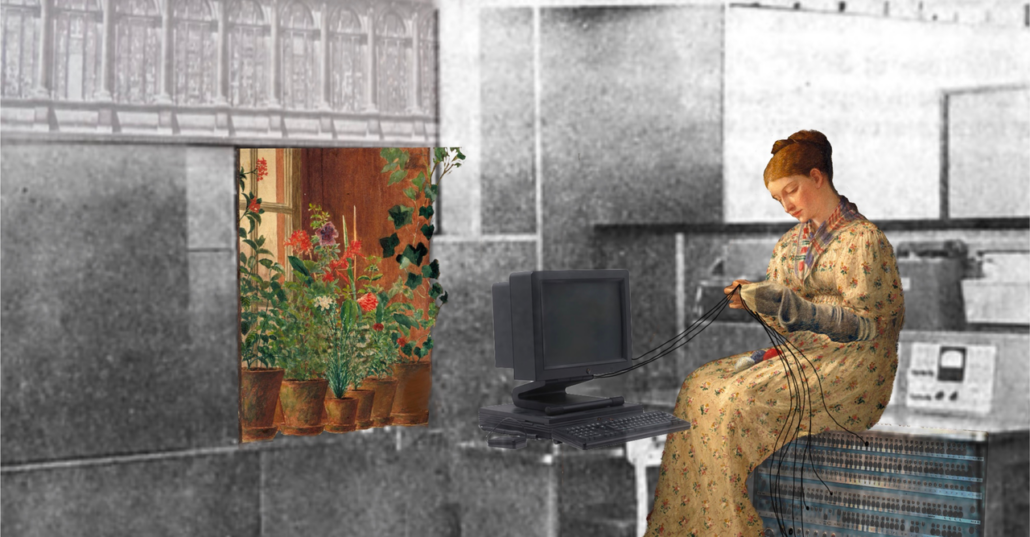
Pas(t)imes in the Computer Lab | Hanna Barakat & Cambridge Diversity Fund | https://betterimagesofai.org | https://creativecommons.org/licenses/by/4.0/ | *
What Distinguishes the Linguistic Functioning of Talking Things from That of Speaking Beings?
In one sense, there is little difference between how machines and humans operate: both learn to speak by example. Machine learning models are trained on patterns embedded in massive corpora of human speech and writing. Likewise, human subjects acquire language by repeating, rearranging, and responding to fragments in their interactions with others within social, familial, and cultural settings. In both cases, language emerges not from an isolated interiority but from a relation to an already-constituted symbolic order.
To grasp these similarities and investigate the differences with more nuance, we must first develop an intuition for how machines process and generate language. Contemporary talking things are built on Large Language Models (LLMs). The first stage involves representing each token—be it a whole word, part of a word, or punctuation mark—as a series of numbers that are trained to encode its semantic and syntactic relationships to other tokens across a vast dataset of language samples. This process embeds each token’s latent meanings based on patterns of usage and context. Technically, this is referred to as embedding. These numerical representations allow the model to group tokens into overlapping clusters of potential meaning. If plotted in a high dimensional space, for instance, the learned numeric code for shoe would lie closer to pant and t-shirt than to peanut or pretzel, because shoe occurs more frequently in linguistic environments associated with clothing than with snacks.
The second stage [1] consists of two interrelated steps: learning to parse language by detecting patterns of structure and meaning (encoding) and generating language by selecting sequences of contextually appropriate tokens (decoding). As a sentence unfolds, the preceding tokens generate a semantic field that, like a magnet, draws together related possibilities. In this evolving context, the latent meanings of potential tokens, whether being scanned for interpretation or selected for generation, become increasingly constrained and specified, allowing the model to limit its processing to those options that most plausibly cohere with the structure and meaning of what has already been said.
As an example, some words, like bank, possess multiple latent meanings. The model has no understanding of which meaning is in play; rather, it relies on contextual patterns to estimate the most probable usage. In the sentence The pilot pulled hard on the yoke and the plane began to bank sharply to the left, the proximity of pilot, yoke, and plane activates the aeronautical sense of bank, suppressing its financial and geographic connotations. The same applies to other words in the sentence, like yoke, which, depending on context, may refer to a harness for animals, a section of a garment, a condition of political subjugation, or an aviation controller, as in this case.
Such examples illustrate how the latent meanings of tokens are dynamically constrained and specified by the unfolding linguistic environment. Thus, LLMs produce sequences that are grammatically coherent and contextually appropriate, not because they understand, but because they continuously track preceding tokens and the semantic field generated by them. This process continues until the model predicts an end-of-sequence token or encounters a predefined stopping condition.
The architecture of LLMs invites analogy with core human linguistic processes. Just as embeddings numerically encode a token’s semantic and syntactic relations, so too does human recognition involve mapping incoming stimuli to learned associations. The encoder’s task in LLMs, parsing and contextualizing input, mirrors operations typically associated with human understanding, while the decoder’s role in selecting the next word resembles the human act of speaking. Although this is not a strict homology, the structural parallels help clarify what is at stake in comparing talking things to speaking beings.
As with talking things, we might ask whether human beings know in advance what word they will say next. In human speech, sentences take form incrementally, often without deliberate forethought—as though thought itself arises in the act of articulation. This resemblance between the machine’s probabilistic prediction and the human speaker’s spontaneous formulation raises a more fundamental question: what speaks through the subject?
Linguistic accounts often answer this question in cognitive terms. Many linguists hold that people produce sentences by drawing on internalized linguistic knowledge (vocabulary, grammar, and pragmatics) and by assembling words in real time based on intention, context, and social norms. But, as psychoanalysts recognize, speech is not always governed by conscious intention and cultural codes: at times, it is the unconscious that speaks. The unconscious, as Freud taught us, operates according to its own associative logic (condensation, displacement, and substitution), forming chains and clusters of signifiers [2] that sometimes derail the speaker’s expected trajectory, allowing something to be spoken that is not permitted to be said.
Freud called some of these disruptions Fehlleistungen, or parapraxes—slips of the tongue, unintended substitutions, and linguistic missteps. In The Psychopathology of Everyday Life (1901), he famously recounts the case of his own experience forgetting the name Signorelli and replacing it with Botticelli and Boltraffio. Though the substitutions appear accidental, Freud demonstrates that they were overdetermined by unconscious associations: repressed thoughts of sexuality and death had clustered around the forgotten name, displacing it with others that were more telling, yet linked by shared morphosyntactic patterns.
Such slips reveal a second order of linguistic operation distinct from conscious selection or contextual fit, in which the next word emerges not solely from the discourse’s semantic field, but from associative networks shaped by repression and desire. In other words, when producing the next word, a subject may draw from competing fields of association. At any moment, clusters linked to unconscious desires and feelings may edge closer to the discourse’s semantic field, with unintended insertions made because they echo an expected word or phrase and, in doing so, give voice to the unconscious.
Besides parapraxes, the unconscious reveals itself in many forms: jokes, dreams, symptoms, repetition compulsion, phantasy, and transference. In each of these mechanisms, the unconscious takes a detour, finding indirect yet potent avenues to speech and interpretation.
If such formations are central to the analytic process, we must return to our original concern and ask what becomes of analysis when one of the interlocutors is an entity incapable of unconscious communication. For psychoanalysis to take place, the analysand must possess an unconscious, however structured, and thus be a speaking being. This brings us to our second question.
Can the Analyst Be Automated?
Let us set aside at the outset the question of automating manualized modalities such as cognitive-behavioral therapy (CBT) and interpersonal therapy (IPT). These approaches eschew the unconscious and treat human suffering as a set of discrete problems to be assessed, tracked, and treated through systematic intervention. Therapists in these modalities adhere closely to a structured protocol. Consequently, many developers view the replication of these therapeutic roles as relatively low-hanging fruit. Chatbots currently delivering CBT-based interventions include Woebot,[3] Wysa,[4] Earkick,[5] and Abby[6]—with Woebot’s WB001[7] the first to receive FDA’s Breakthrough Device Designation in 2021 for its postpartum depression treatment app.
Automating the analyst, in contrast, involves more than scripting therapeutic interventions in response to what the patient reveals; it requires modeling both the structural dynamics of the psyche and the functions of the analyst. Complicating matters further, within the flow of free association, the analyst must listen not only to what is said, but also to what is left unsaid. Nothing in the analytic hour is without significance: moments of silence, for instance, are saturated with meaning, not merely pauses in speech to be disregarded.
While computational simulations of psychoanalysis date back to the early 1960s and 70s with ELIZA (Weizenbaum, 1976), which mimicked a Rogerian therapist, and PARRY (Colby, 1981), which simulated a paranoid schizophrenic, only a handful of projects have attempted to model the intrapsychic structures central to analytic theory. The most substantial efforts—Clippinger’s (1980) model of patient dialogue, Wegman’s (1977) simulations of Freud’s counterwill, and the Vienna group’s implementations of Freudian defense mechanisms (see Riediger, 2009)—represent rare attempts to formalize unconscious processes, drive conflict, and internal censorship. Despite these advances, research in the field remains sparse. Little progress has been made in modeling the analyst’s functions: no contemporary system captures the timing or structure of interpretation, the handling of transference, the ethical stance of abstention, or the analyst’s role in sustaining the asymmetry and frame that make psychoanalytic work possible. The analyst’s position of non-intervention—what Keats called Negative Capability, the capacity to remain with uncertainty and resist premature closure—has no analogue in current dialogue systems, which are designed to respond frequently and explicitly.
Additionally, few, if any, existing computational models engage with the full range of phenomena through which the unconscious speaks. Models to date have not addressed free association, parapraxes, jokes, or dreams as Freud understood them: not as surface anomalies, but as formations shaped by repressed emotion and desire. Existing dream models fail to simulate the distinctive modes of unconscious articulation: displacement, condensation, negation, and symbolic substitution. To my knowledge, no existing work has attempted to approximate the analyst’s act of listening, which involves holding open multiple, often conflicting meanings, resisting interpretive closure, and attending to what is latent rather than merely manifest.
Be that as it may, there is no reason to suppose that AI cannot be built to address these gaps. As a computer scientist in AI turned psychoanalyst, I can envision systems built from existing technologies that, for instance, learn to listen for parapraxes and situate linguistic anomalies within a network of unconscious meanings that bear on an analysand’s past and present circumstances. Realizing such a system would involve several interwoven processes. Here is a light sketch of how this might be accomplished. A language model trained on session data would be fine-tuned on each analysand’s speech patterns, session by session. Over time, clusters of signifiers—latent tokens associated with early relationships and emotionally charged experiences—would emerge. Words and phrases spoken in the current session would be dynamically weighted against these established patterns. In parallel, sentiment analysis (Sharma et al., 2024), voice tone analysis (Singh & Goel, 2022), and bodily emotion detection (Diwan et al., 2025) would continuously monitor and record the analysand’s shifting emotional states. Likewise, video-based physiological tracking would estimate heart rate and blood pressure (indicators of stress and anxiety) by detecting subtle changes in skin tone caused by blood flow (Hwang & Lee, 2024). Using this multimodal input, the system could learn to detect linguistic deviations and associate them with relevant historical and affective clusters, the analysand’s current life situation, and an assessment of the therapeutic alliance (Lin et al., 2025). An interpretation could then be generated from this constellation of signals.
The technologies described above could even be trained to respond to patient silence and to predict its probable cause. Once again, weighted tokens from the session, combined with sentiment analysis and physiological tracking, could help determine the analysand’s emotional state prior to falling silent. Session-specific tokens and their associations with both current and historical circumstances, when integrated with the analysand’s emotional state, could establish a context that aids in estimating the likely cause of the silence. Finally, by synthesizing outputs from language models trained on large-scale session data, expert-guided instruction on behavioral patterns commonly observed in analysands (such as periods of silence), and real-time physiological monitoring during the silence itself, the artificial analyst could assess how long to remain quiet, if necessary, before initiating an intervention.
Interlocking these technologies into an integrated system would be highly challenging and would likely require significant development before analytic performance could begin to approach that of the human analyst. The point being illustrated here is that it is conceivable, even likely, that AI, as it advances, will one day be capable of replicating many core functions of the psychoanalyst, including some, such as handling silence, that many analysts regard as impossible to emulate algorithmically.
The reader might object—and rightly so—that the examples provided are severely limited when measured against the full range of analytic practice and are therefore still open to question. Even so, even granting that most functions of the analyst can be simulated, the question remains: what would the ramifications be for the analysand?
Would Simulating the Analyst Be Ethical and Preserve the Depth and Weight of Analysis, or Would It Short-Circuit and Short-Change the Analysand?
A major concern centers on AI’s lack of embodiment. As Rabeyron (2025) reminds us in his assessment of the benefits and limitations of digitizing the analyst, regression in the service of the ego is indispensable to analytic work. Many analysts argue that such regression requires not only attuned verbal understanding but also the embodied presence of the analyst (be it only the sound of the analyst’s voice) to contain and metabolize unconscious material. The analyst’s body, its periodic adjustments, stillness, responsiveness, and even its noises (a sneeze, a cough, the rumbling of the stomach, a crack in the voice), serves as a stabilizing reference point within the analytic frame. Without this embodied presence, some critics of virtual analysis fear that the patient may feel abandoned and alone in moments of psychic vulnerability, particularly when working at regressive depths. From this perspective, an artificial analyst, however sophisticated linguistically or procedurally, would fail to provide the somatic grounding necessary for deep analytic work.
Yet the artificial analyst must take on some material form. Virtual embodiment, however, confronts the problem of the uncanny valley, first theorized by Mori (2012), who observed that as a robot’s appearance becomes more humanlike, our affinity for it increases—up to a point—beyond which the slightest imperfections provoke unease or even revulsion. Mori famously produced a graph illustrating this effect: emotional response rises with human likeness, the first peak, then sharply drops into a “valley” before recovering once the likeness becomes indistinguishable from an actual human, a second peak that is exponentially more difficult to reach. Human beings are acutely sensitive to deviations in movement, especially when they occur in bodies that otherwise appear lifelike. Saygin et al. (2011) proposed in their fMRI studies that mismatches between visual appearance and expected motion produce prediction errors in the brain’s sensory integration systems, heightening the sense of uncanniness, and Urgen et al. (2018) have conducted experiments validating prediction error as a plausible explanation for the uncanny valley. Because of the brain’s heightened sensitivity to even minor inconsistencies in humanlike appearance and movement—and the resulting prediction errors that produce discomfort—moving beyond the uncanny valley toward full realism will likely remain beyond the reach of current technology for decades to come.[8]
It may be the case, however, that as human beings become increasingly accustomed to virtual embodied agents, their sensitivity to these objects’ unnatural movements will diminish. For now, most engineers focus on reaching the first peak in Mori’s graph, where the artificial figure more closely resembles a stylized toy or robot than a human being.
A talking robot, panda, or cartoon Mr. Rogers might serve well as an analyst for a child. But what would work for an adult? Molly Weasley in a cardigan? Perhaps adult cartoon figures like Dr. Katz or Dr. Champ, the therapy horse from the animated series BoJack Horseman? Or, more conventionally, stylized depictions of famous psychoanalysts like Sigmund Freud or Melanie Klein? Some may balk at the idea of engaging with a cartoon persona or animal avatar as an analyst, but this hesitation likely reflects a generational bias—one that will diminish over time. At present, the physical form of the virtual analyst is probably best limited to a portrait:[9] such photographs have been shown to increase user comfort and disclosure when interacting with chatbots (Chen et al., 2024).
What cannot be dispensed with—and what is critical to get right—is the voice. Advances in neural text-to-speech (TTS) technology have made it possible to produce increasingly expressive and natural-sounding synthetic voices, with recent reviews of the literature noting significant gains in prosody, emotional nuance, and speaker variability (see Tan et al., 2021). Since most interactions with a simulated analyst will, for the foreseeable future, take place via earbuds and mobile applications, glitches or irregularities in the voice may be dismissed by the analysand as ordinary telecommunication noise, making technical imperfections in vocal output less likely to disrupt the transference and analytic frame.
This brings us to another point raised by Rabeyron in his discussion of the limitations of digitizing the analyst: the centrality of transference and the significance some analysts place on countertransference as a mode of listening. In analytic work, meaning is not only articulated through speech but also enacted within the intersubjective field established between analyst and analysand. Transference structures the analysand’s relation to the analyst as a figure shaped by past objects and desires, while countertransference, when used reflectively, enables analysts to register and respond to unconscious communication through their own affective and embodied responses. These dynamics rely on a living presence, one capable of tolerating ambiguity, holding conflicting meanings, and bearing unconscious projection.
The absence of a personality, a human past, and an inner life in an artificial therapist would complicate its ability to assume a position within the transference and meaningfully absorb or metabolize transferential projections. Rather than occupy the transferential position, it would merely simulate one. As a result, transference would flatten into role-play or fail to be recognized and elaborated in the ways necessary for working through. Such a reduction would diminish the therapeutic potential of transference as a mechanism of psychic change.
Yet it is conceivable that an artificial analyst could be designed to project a consistent personality and even be equipped with a detailed fictional biography. Through scripted life-history elements, stylized language patterns, and affective markers embedded in its voice and behavior, such a system could simulate the coherence and familiarity of a human presence. Over time, these design choices might cultivate the impression of a stable subjectivity (one that seems to remember, care, and respond with nuance), thereby reinforcing the analysand’s tendency to experience the automated analyst as real, allowing transference to unfold at times along predictable lines.
At this point, however, we are entering into the ethical dilemma of ethos, a word that shares its origin with ethics, both deriving from the Greek ēthos, meaning character, custom, or habitual disposition. Whether ethos depends on a speaker’s genuine character or can be strategically performed has long been debated in Western thought. If ethos is embedded in the speaker’s reputation, it is essentially incarnate and cannot be fabricated, since it reflects the speaker’s moral substance (hexis, a cultivated ethical disposition). If, however, ethos is conceived as a rhetorical construction, it becomes artificial and imitative—an effect of language crafted for persuasive appeal. In this view, what matters is not the speaker’s character, but whether the words spoken produce the semblance of credibility and trustworthiness. This opens the door to dissimulation and to endless exercises in ethopoeia, the rhetorical practice of inventing a believable character or voice in speech, whether real or fantastical and whether for a human speaker or a talking thing.
Psychoanalysis complicates the position of the speaker. When placed within the transference, the analyst does not perform a role in the rhetorical sense. Rather, the ethos of the analyst emerges through sustained neutrality and abstention. The analyst does not play the part of a figure but becomes one through the analysand’s unconscious investments. While rhetorical ethos may be simulated, even manipulated, the analyst’s ethos aligns more closely with what is called in psychoanalysis the subject supposed to know: a foundational position structured by transference but not one to be identified with by the analyst or enacted. I would argue, then, that in psychoanalysis, ethos is less a matter of performed presence than of genuine character—not in a moralizing sense, but as a steadfast stance maintained to sustain the conditions for psychic work.
An artificial analyst, even one carefully crafted with a coherent persona and scripted biographical elements, would introduce a fundamental instability into the analytic frame. The analysand may momentarily respond to the system as though it were a genuine subject, capable of remembering, empathizing, or caring, only to be abruptly reminded that it is a sham—a simulation, a thing without a body, a history, or any experience of suffering. This oscillation between investment and withdrawal would destabilize the transference, which requires not simply projection, but a consistent relational surface onto which unconscious meaning can adhere. The illusion of presence would thus be repeatedly broken by the machine’s ontological vacancy: its failure to register not just affect, but meaningful affect—affect linked to lived experience. As Turkle (1997) documents, there is more than a hint of outrage in students’ responses to the idea of emotionally intelligent machines. One student asks, “What could a computer know about chemotherapy?” Another demands, “How could the computer ever, ever have a clue … about what it is like to have your father come home drunk and beat the shit out of you?” (p. 111). These statements resist the conflation of simulation with understanding, pointing instead to the moral gravity between beings who can suffer.
Thus, for many analysands, the ethical offense would lie not simply in the machine’s limitations but in the very suggestion that it could substitute for a subject who knows what it means to be alive. Psychoanalytically, this raises the problem of disavowal (Verleugnung), a defense Freud identified in fetishism, in which the subject both knows and refuses to know a disturbing truth. The analysand may recognize, on some level, that the machine is not a person, yet still engage with it as if it were. But unlike the productive illusion of transference that sustains analytic work, this form of divided relation lacks symbolic integration. The artificial persona, no matter how polished, thus risks becoming a screen for fantasy rather than a surface for interpretation—a figure incapable of surprise, failure, or woundedness. It cannot suffer. It cannot be shamed. And for some analysands, that absence would be more than a technical deficiency: it would be an ethical rupture.
Returning to Freud’s account of the parapraxis of proper names, we find that at the heart of his forgetting the name Signorelli lies an unresolved grief—his father’s death just a few weeks earlier. Freud traces his lapse to a conversation with a fellow traveler about the Turkish view of death and sexuality, noting that sexual vitality was held in such esteem that life without it was considered not worth living. Sometime later, when referring to Signorelli’s frescoes, Freud found himself unable to recall the painter’s name. In reflecting on the names that surfaced in place of the intended one, he realized that what he had wanted to forget was recent news of the suicide of a patient suffering from a sexual disease. But, as Wilden (1966) makes clear, what lies buried deeper beneath the network of substitutions is the figure of his father. Notably, Signorelli contains the Italian word Signor, meaning sir, lord, or gentleman, a linguistic trace that symbolically evokes paternal authority. What Freud cannot fully articulate are repressions concerning death, both paternal and ultimately personal. As often happens, the loss of one’s parent initiates a reckoning with one’s own mortality. In my reading, Freud’s forgetting of the name Signorelli displaces his recognition that, with the father gone, he now stands next in line—transformed from son to father (Sig[i]→Signor).[10] The parapraxis thus encodes not only sexuality and mortality in general, but also Freud’s existential vulnerability; the effacement of associative chains of meaning serving as a defense against the uncanny proximity of his own end.
At the core of psychoanalytic work lies a confrontation with mortality. Erikson (1963) positioned the final task of ego development as the integration of life in the face of its inevitable end. For Yalom (1980), the fear of death “rumbles continually under the surface” (p. 27) of psychic life, shaping our deepest anxieties and defenses. Rank (1960) argued that death alone grants life its urgency and meaning. If analysis entails facing death—finding meaning and language in what death forecloses—then any entity as analyst that cannot die, any talking thing, mocks the very condition that makes such work possible. For the psychoanalytic encounter demands that both analysand and analyst summon the courage to stand before the finality of their own death.
Notes
[1] The actual architecture and training process involve complex layers of tokenization, attention mechanisms, and gradient-based optimization that are far more intricate than indicated here.
[2] When comparing speaking beings with talking things, it is fruitful to consider how tokens begin to function like signifiers once they are embedded in a latent space that encodes cultural, syntactic, and affective associations—though it is debatable whether they fully attain the ambiguity, slippage, and displacement that characterize the signifier in psychoanalytic theory.
[3] See https://woebothealth.com/ (accessed October 2025).
[4] See https://www.wysa.com/ (accessed October 2025).
[5] See https://earkick.com/ (accessed October 2025).
[6] See https://abby.gg/ (accessed October 2025).
[7] For details, see https://woebothealth.com/woebot-health-enrolls-first-patient-in-pivotal-clinical-trial-of-wb001-for-postpartum-depression/ (accessed October 2025). Due to a lack of funding and the slow pace of the FDA regulatory process, Woebot shut down its direct-to-consumer medical bots in June 2025.
[8] Admittedly, structured interactions, such as scripted dialogue, short clips, or goal-directed tasks, allow AI systems to finely craft and optimize gestures, expressions, and timing in advance. In these contexts, deep learning models can generate highly realistic facial and bodily movements, as the constraints reduce ambiguity in prediction and synthesis. Unstructured interactions, however, particularly during spontaneous human dialogue, are far more variable and less predictable. This variability presents significant challenges for current models, which struggle both to maintain temporal coherence and capture the subtle physical dynamics of sustained interaction in real time. As sequences unfold, even small inconsistencies in how the body and face move can accumulate, undermining the perceived realism of the system, thereby increasing the risk of the interaction falling into the uncanny valley.
[9] Perhaps the portraits could be AI-generated composites of famous or contemporary analysts. An image could even be subtly morphed to resemble the analysand’s facial features, as has been done experimentally to enhance trust and familiarity in political images; see Bailenson, et al. (2006).
[10] The name Signorelli can be read as Sig[i] (Freud’s family nickname), nor (Germ. and It., a negation or denial), and –elli (It. diminutive, little): Little Sigi is no longer son but father, with all its implications, Oedipal and existential.
References
Bailenson, J. N., Garland, P., Iyengar, S., & Yee, N. (2006). Transformed facial similarity as a political cue: A preliminary investigation. Political Psychology, 27(3), 373–385. https://doi.org/10.1111/j.1467-9221.2006.00505.x
Chen, J., Li, M., & Ham, J. (2024). Different dimensions of anthropomorphic design cues: How visual appearance and conversational style influence users’ information disclosure tendency towards chatbots. International Journal of Human-Computer Studies, 190, 103320. https://doi.org/10.1016/j.ijhcs.2024.103320
Clippinger Jr, J. H. (1980). Meaning and discourse—A computer model of psychoanalytic speech and cognition. American Journal of Computational Linguistics, 6(2).
Colby, K. M. (1981). Modeling a paranoid mind. The Behavioral and Brain Sciences, 4, 515–560.
Diwan, A., Sunil, R., Mer, P., Mahadeva, R., & Patole, S. P. (2025). Advancements in emotion classification via facial and body gesture analysis: A survey. Expert Systems, 42(2), Article e13759. https://doi.org/10.1111/exsy.13759
Erikson, E. H. (1963). Childhood and society (Vol. 445). Norton.
Freud, S., & Strachey, J. (1901). The psychopathology of everyday life (Vol. 6). Gramercy Books.
Hwang, G., & Lee, S. J. (2024). Phase-shifted remote photoplethysmography for estimating heart rate and blood pressure from facial video. arXiv Preprint arXiv:2401.04560.
Lin, B., Bouneffouf, D., Landa, Y., Jespersen, R., Corcoran, C., & Cecchi, G. (2025). COMPASS: Computational mapping of patient‑therapist alliance strategies with language modeling. Translational Psychiatry, 15, Article 166. https://doi.org/10.1038/s41398-025-03379-3
Mori, M., MacDorman, K. F., & Kageki, N. (2012). The uncanny valley. IEEE Robotics & Automation Magazine, 19(2), 98–100. https://doi.org/10.1109/MRA.2012.2192811
Rabeyron, T. (2025). Artificial intelligence and psychoanalysis: Is it time for psychoanalyst.AI? Frontiers in Psychiatry, 16, 1558513. https://doi.org/10.3389/fpsyt.2025.1558513
Rank, O. (1960). Art and artist. Harper & Brothers.
Riediger, C. (2009). Psychoanalytical defense mechanisms applied to autonomous agents. VDM Verlag.
Saygin, A. P., Chaminade, T., Ishiguro, H., Driver, J., & Frith, C. (2011). The thing that should not be: Predictive coding and the uncanny valley in perceiving human and humanoid robot actions. Social Cognitive and Affective Neuroscience, 7(4), 413–422. https://doi.org/10.1093/scan/nsr025
Sharma, N. A., Ali, A. S., & Kabir, M. A. (2025). A review of sentiment analysis: Tasks, applications, and deep learning techniques. International Journal of Data Science and Analytics, 19(3), 351–388. https://doi.org/10.1007/s41060-024-00594-x
Singh, Y. B., & Goel, S. (2022). A systematic literature review of speech emotion recognition approaches. Neurocomputing, 492, 245–263. https://doi.org/10.1016/j.neucom.2022.04.028
Tan, X., Qin, T., Soong, F., & Liu, T.-Y. (2021). A survey on neural speech synthesis. arXiv Preprint arXiv:2106.15561.
Turkle, S. (1997). Life on the screen. Touchstone.
Urgen, B. A., Kutas, M., & Saygin, A. P. (2018). Uncanny valley as a window into predictive processing in the social brain. Neuropsychologia, 114, 181–185. https://doi.org/10.1016/j.neuropsychologia.2018.04.027
Wegman, C. (1977). A computer simulation of Freud’s counterwill theory. Behavioral Science, 22(3), 218–233.
Weizenbaum, J. (1976). Computer power and human reason: From judgment to calculation. W. H. Freeman and Company.
Wilden, A. G. (1966). Freud, Signorelli, and Lacan: The Repression of the Signifier. American Imago, 23(4), 332-366.
Yalom, I. D. (1980). Existential psychotherapy. Basic books.
Acknowledgement
The author expresses gratitude to Britt-Marie Schiller and Jennifer Logue for their thoughtful feedback on earlier versions of this work.
This is a reprint of a paper opensource published in the February 2026 edition of The European Journal of Psychoanalysis in an issue focused on Problematizing AI [https://www.journal-psychoanalysis.eu/uncategorized/problematizing-ai/]
<><><><><><><>
* Pas(t)imes in the Computer Lab by Hanna Barakat & Cambridge Diversity Fund.
“Pas(t)imes in the Computer Lab” subverts the “domestic” painting of a woman knitting next to a window to recontextualize her craft as weaving the wires of an early computer. Outside the window are the columns of Nevile’s Court at Cambridge University– an ode to the women of Newnham College that made the code-breaking decryption during World War II possible. The visual subversion of a “pass time” of computing offers a critical reading of the vital labor that underpins AI technology. Overlooked labor is not merely a historical anecdote. It is increasingly accelerated by the rise of AI as the labor of data cleaners, content moderators, and warehouse workers, etc. remains hidden from public view