
Interview with Carol Reichenthal PhD
By Kathryn Fleming-Ives, MD
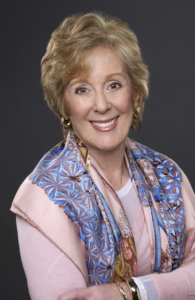
Carol Reichenthal, PhD
Carol Reichenthal, PhD, based in Massachusetts, is a psychotherapist member of APsA. The APsA Psychotherapist Committee first started in 1996 as the Committee on Psychotherapist Associates (PAs) and Carol joined soon after. She was the first psychotherapist Co-Chair of the Psychotherapy Department. In 2022, she returned from ex-officio status to co-chair the Psychotherapist Committee during COVID when the committee needed her experience and expertise.
Please tell us about yourself and your journey to becoming a psychologist.
Carol: Like so many of us, a background of family trauma is part of what led me to becoming a therapist. There was a life changing serious illness in my family when I was 7 and my father died suddenly when I was 12. Things turned upside down twice in a short while and a keen sense of vulnerability, loss and impending losses were part of our family structure, baked into our bones and psyche. And being only a generation away from the Holocaust surely added to that in its own way. Financial insecurity followed these losses. My mother, overwhelmed and grief stricken, was already working in the NYC public schools but needed to increase her hours so started teaching at afterschool programs as well. As a teenager I worked to help.
In junior high school, I became involved in a street gang, the Fordham Baldies. I attended Bronx High School of Science during the school day, and after school I hung out with my gang buddies. This experience deepened my curiosity about difference, hopefully expanded my empathy, increased the range of my emotional ties and helped to expand my understanding of other people and myself – all contributing to later development as a psychotherapist. I’m sure it added a dimension to my rebellious streak as well.
I went to City College (CCNY), majoring in English, but switched to psychology when I realized there was no living to be made writing very mediocre fiction – and earning a living was of paramount importance with my history of needing to keep things afloat. The common thread, however, between the two majors was a focus on narrative about human emotion and explicating its twists and turns. Somehow, I thought a career in psychology would be steadier, while retaining a focus on the life of emotion, and surely, I could get a job teaching thereby, continuing in the “family business”.
I went to the State University in Buffalo New York for graduate school since there were Regents Scholarships and fellowships to pay the cost. It was an exciting time, late sixties, early seventies. The chair of the psychology department at the time, Murray Levine, was among the foremost community psychologists in the country and the university hosted Michel Foucault, Robert Creeley, Gregory Corso and Leslie Fiedler. It was a heady, eye-opening, expansive, intellectually exciting time. It was also politically exciting and community-building. I had the opportunity to work in a free clinic, to consult around drug addiction programs and Model Cities Programs; I was also able to do some work around equity, race relations, and diversity, working for a small consulting company owned by two young men of color, Jesse Qualls and Leon Butler. They named their group Amistad after the slave ship that was taken over in an uprising. With Jesse and Leon, I focused on school desegregation in the Niagara Falls school system. Parenthetically – as it was also a culturally full and rich time – I also got to meet the Alvin Ailey dancers and the Grateful Dead! Also, I taught what I believe was the first feminist psychology course in the country. That backdrop was not what would be called conducive to traditional psychoanalytic thinking.
Then I left Buffalo, moved to Boston, started teaching at a small college, got my license and started a practice. It was then that I realized how much I didn’t know.
I was later exposed to thinking analytically when I was treating a particularly perplexing patient and sought supervision. My supervisor happened to be an analyst who gave me an article per week and the following week, I would ask for another. Eventually, he told me about a new program at Boston Psychoanalytic Society & Institute (BPSI) to train psychotherapists analytically and asked if I wanted to apply. That began my journey as a psychoanalytic therapist. I was lucky to attend BPSI’s Advanced Psychoanalytic Psychotherapy Training Program (ATP) where I joined a collegial community of faculty, friends and colleagues.
Can you share with us, when and how you first became involved in APsA and the Psychotherapist Committee (as it is now called after the 2023 bylaw change, granting full member status to psychotherapists)?
I became involved shortly after the Committee was formed in 1996. A couple of analyst friends talked about the Scientific Meetings and they sounded so interesting. I eventually attended a National Meeting in New York and found the programs were terrific; as a bonus, I was able to visit family in New York, which seemed perfect! Then I met Jane Warren, (a very early chair of the Psychotherapist Associates (PA) Committee) and Mae Kastor, Janis Chester and the rest of the Committee. Jane recruited me, first as a PA committee member, later as her co-chair. Everyone was quite welcoming, and, on a personal level, the hierarchy between analysts and therapists was far in the background. I found a professional home at APsA, thanks to Jane, the PA committee, and the welcoming APsA leadership.
Psychotherapists have recently become full members of APsA with the bylaw change in 2023. Before that time, psychotherapists could join APsA as Associate Members with a more limited role in the organization. What was it like to be a psychotherapist in APsA when you first joined?
Being an Associate was wonderful. To me, it wasn’t much different than being a full member because we already had the Psychotherapists Present Discussion Group; we started and hosted the Business of Practice Workshop and we could volunteer for other committees. It was fun, collegial and productive. We didn’t vote but nobody I knew even thought about that. We were a community within the association.
How did the idea for a Psychotherapy Department come about?
In 2003 or 2004 Richard (Dick) Fox started the Psychotherapy Task Force as his post-presidency project. The Task Force began with an eye towards further integration of psychotherapy done by both psychoanalysts and psychotherapists. It focused on establishing a respectful, inclusive place for psychotherapists and psychotherapy. The Task Force was comprised of fifteen to twenty people from all mental-health disciplines with a mixture of analysts and therapists including Judy Logue, Alan Pollack, Jose Saporta, Marcia Kaplan, Sally Rosenberg, Jane Warren, Ann Dart, Mae Kastor, me and others. There was a lively exchange of ideas. The Psychotherapy Department grew out of the Task Force. We had the support of APsA’s president and president-elect, Prudence (Prudy) Gourguechon and Warren Procci. We proposed the idea of shared leadership, with a psychotherapist and a psychoanalyst Co-Chairing the Department. That’s how Dick and I came to co-chair the first iteration of the Department.
What are some of the projects/initiatives that you have worked on as part of the Psychotherapist Committee and Psychotherapy Department?
I think all our Psychotherapists Present Discussion Groups have been excellent. We started the Psychotherapist Listserv and wrote the rudimentary psychotherapy web page on APsA’s website. I worked with Kim Gelé on the survey of the PA membership that led to creating the Business of Practice Workshop. Judy Logue and I co-facilitated the first Workshop meeting that topped out at 80 registrants! And, of course, I am especially proud that the Task Force led to the Psychotherapy Department.
Can you tell us about some of the people you have worked with in APsA who have been influential in psychotherapist involvement?
There really are too many to mention but let me start with Dick Fox. We needed the encouraging and wise support we had from Prudy and Warren. Lynn Moritz, Bob Pyles, Mark Smaller were also very supportive of the PAs and our involvement in APsA. And then there’s Jane Warren, all the task force members, our current psychotherapist committee, with particular thanks to Margo Goldman. Debbie Steinke Wardell helped us enormously from the very beginning as well as Bronwyn Zevallos, Carolyn Gatto and all the APsA staff.
You have now returned to ex-officio status on the Psychotherapist Committee. Up to this point, what are some of the things you are most proud of in your work at APsA.
I am most proud of our committee and how it functions together! It’s a gem. I have been in academia for forty-five years, working in an amazingly collegial psychology department, been involved in other organizations including BPSI, the Massachusetts Association of Psychoanalytic Psychology and served on countless committees, but I have never seen a committee work quite this way. The tone of our committee has always been so cooperative and well-functioning and has been able to maintain and generate wonderful new leadership. Next on the list of what I’m most proud of is having started the Business of Practice Workshop and, of course, I’m very proud of the model of the department, an analyst and therapist side by side in leadership roles.
What would you like to see in the future for APsA as well as for psychotherapists within APsA?
I would love to see increasingly real inclusion for psychotherapists within APsA, in all the myriad ways that we are not yet included both structurally and culturally. And I’d like the model of APsA department/committee co-chairs, being a therapist and an analyst, to take hold.
Thank you, Carol. We are so appreciative of you.
More in the Fall/Winter 2025 Edition
https://apsa.org/wp-content/uploads/2022/08/Layer-80.png
0
0
Sam Hall
https://apsa.org/wp-content/uploads/2022/08/Layer-80.png
Sam Hall2025-12-03 11:50:162025-12-05 16:21:14PsiAN Update: Fall/Winter 2025
https://apsa.org/wp-content/uploads/2022/08/Layer-80.png
0
0
Sam Hall
https://apsa.org/wp-content/uploads/2022/08/Layer-80.png
Sam Hall2025-12-03 11:46:472025-12-05 16:20:45Psychotherapy Department: Our Home at APsA
https://apsa.org/wp-content/uploads/2022/08/Layer-80.png
0
0
Sam Hall
https://apsa.org/wp-content/uploads/2022/08/Layer-80.png
Sam Hall2025-12-03 11:35:252025-12-05 16:19:49Psychotherapist Committee Update: Fall/Winter 2025