Introduction to Special Issue
Irreverence and Psychoanalysis | William Alanson White Institute
by Jean Petrucelli, Ph.D., CEDS-S and Sarah Schoen, Ph.D.
Co-Editors of Psychanalysis and Irreverence (Routledge, 2026)
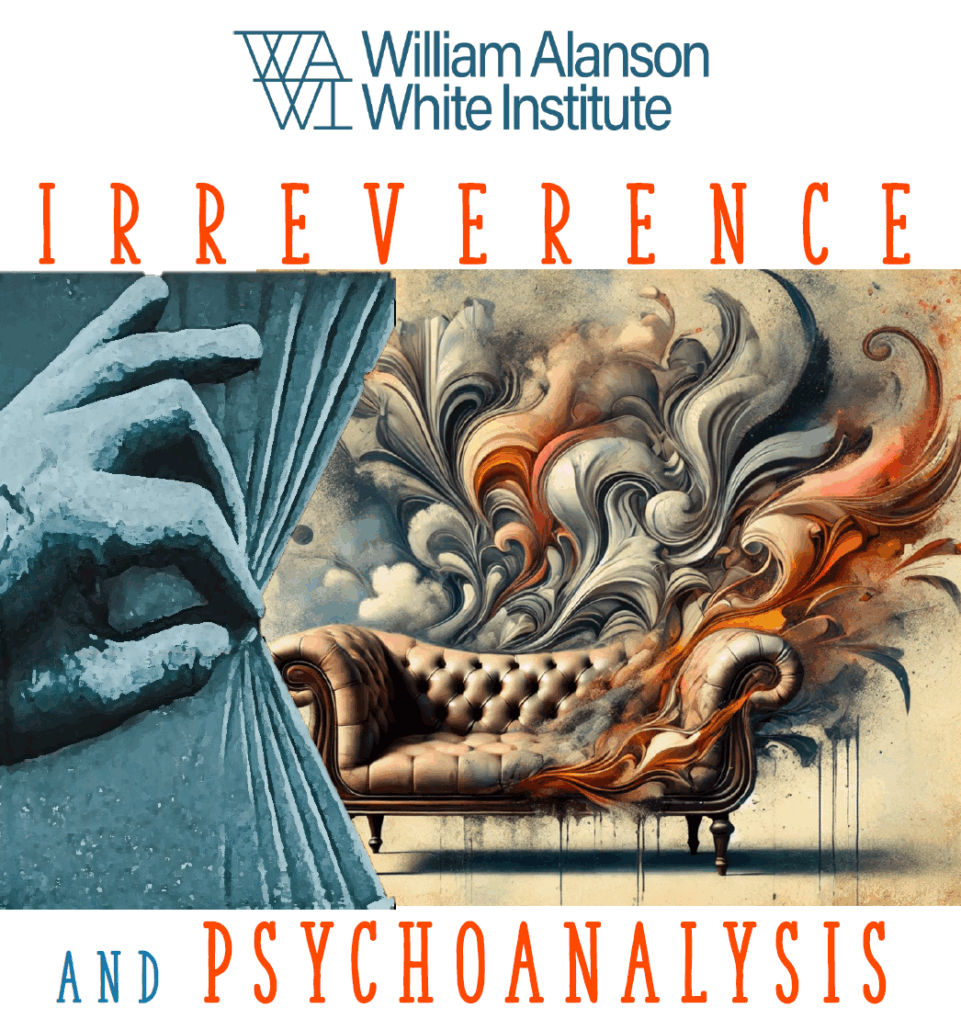
At its best, psychoanalysis is an irreverent practice—challenging convention, subverting existing power structures, deconstructing idealizations, and inviting the outlandish. These features of psychoanalysis have often been in tension with those that emphasize adaptation and can essentialize rather than challenge problematic norms. Exploring these tensions and their generative possibilities became the theme of a conference sponsored by the William Alanson White Institute on Irreverence and Psychoanalysis. The talks and responses presented here were part of that conference.
The advent of AI certainly raises key questions about what it means to challenge existing norms. What about the norm that the psychoanalytic encounter is between two human beings sitting in the same space? Or, at least between two human beings? The Covid pandemic showed us that many things were possible via technology that we had never imagined and probing these norms has opened new possibilities and expanded the ways we might frame a psychoanalytic encounter. In other ways, the burgeoning use of technology, and particularly AI, also threatens what is core to a psychoanalytic encounter that values the intimate, personal, idiosyncratic engagement between two embodied minds.
We are living in turbulent, deeply upsetting times — in the world politically and professionally within our psychoanalytic field. We have been challenged to not be ruled by fear—to find the balance between becoming overwhelmingly embroiled in political issues, while also not turning a blind eye to what’s happening outside our consulting rooms. And we are challenged to try to hold onto our psychoanalytic sensibility – one that privileges the complexity of multiple truths, nuance, and lived experience. Does AI threaten this? Can AI become part of this? The discussions and responses here raise the possibility that the straightforward humanity of the psychoanalytic encounter may, itself, be a form of productive irreverence in our world of technologically mediated experience. At the same time, analysts know all too well how much people fear what’s new and unfamiliar.
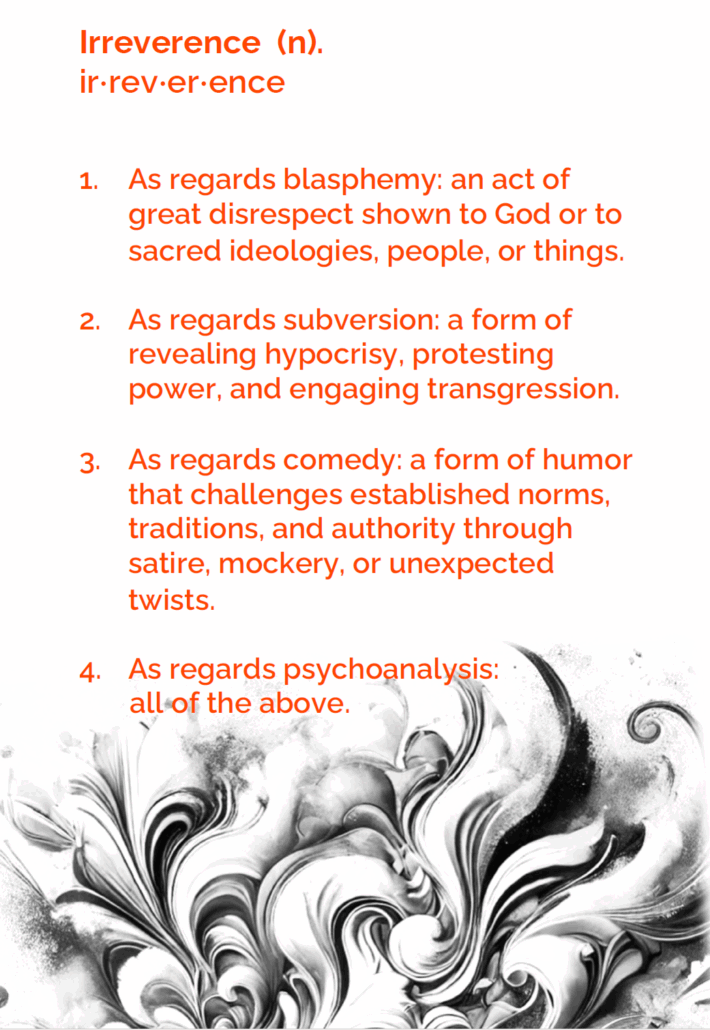
Irreverence
The AI revolution promises historically unprecedented advances. Some artificial intelligence agents already demonstrate utilitarian value by providing companionship, aid, and useful information. These papers consider the accelerating AI revolution from several psychoanalytic angles: What risks does AI pose to how we experience ourselves and each other? Why have we created AI? What human needs does it meet? In short, what are we becoming and why? And, most critically, how might the psychoanalytic tradition positively influence the AI revolution because, after all, the future is not yet written? One thing is for sure: AI demands that we ask ourselves new questions about consciousness, about mutual influence, and about relationality, and about ethics—in short it demands that we ask ourselves new, and urgent questions, about what it means to be human.